Protecting your wood fence in Citrus Springs starts with the right finish
A wood fence in Citrus Springs faces strong sunlight, high humidity, frequent rain, heat, moisture, and the risk of mildew or algae growth. Painting or staining improves appearance and adds a layer of protection, but the right choice depends on the fence's age and condition, the look you want, how much maintenance you expect, and the type of wood. This article guides Citrus Springs and Central Florida homeowners through assessing a fence, choosing paint or stain, preparing and sealing, and planning ongoing fence maintenance for long lasting results.
Stage 1. Assess your fence and why Florida weather matters
Start by checking how Florida weather has affected your fence. Untreated or aging wood commonly shows fading, graying, drying and cracking, warping, moisture absorption, mildew, rot near the ground, splintering, and loose boards. Heat and UV exposure accelerate color loss while heavy rains and humidity encourage mildew and rot. Routine inspection after storms or the rainy season helps you spot problems early. If you see structural issues such as leaning posts, broken rails, or rot around post holes, address those before any cosmetic work. Neighborhoods Fencing recommends evaluating both appearance and structure when planning wood fence maintenance in Citrus Springs and surrounding areas like Dunnellon, Ocala, and Lake County.
Stage 2. What fence staining does and when to choose it
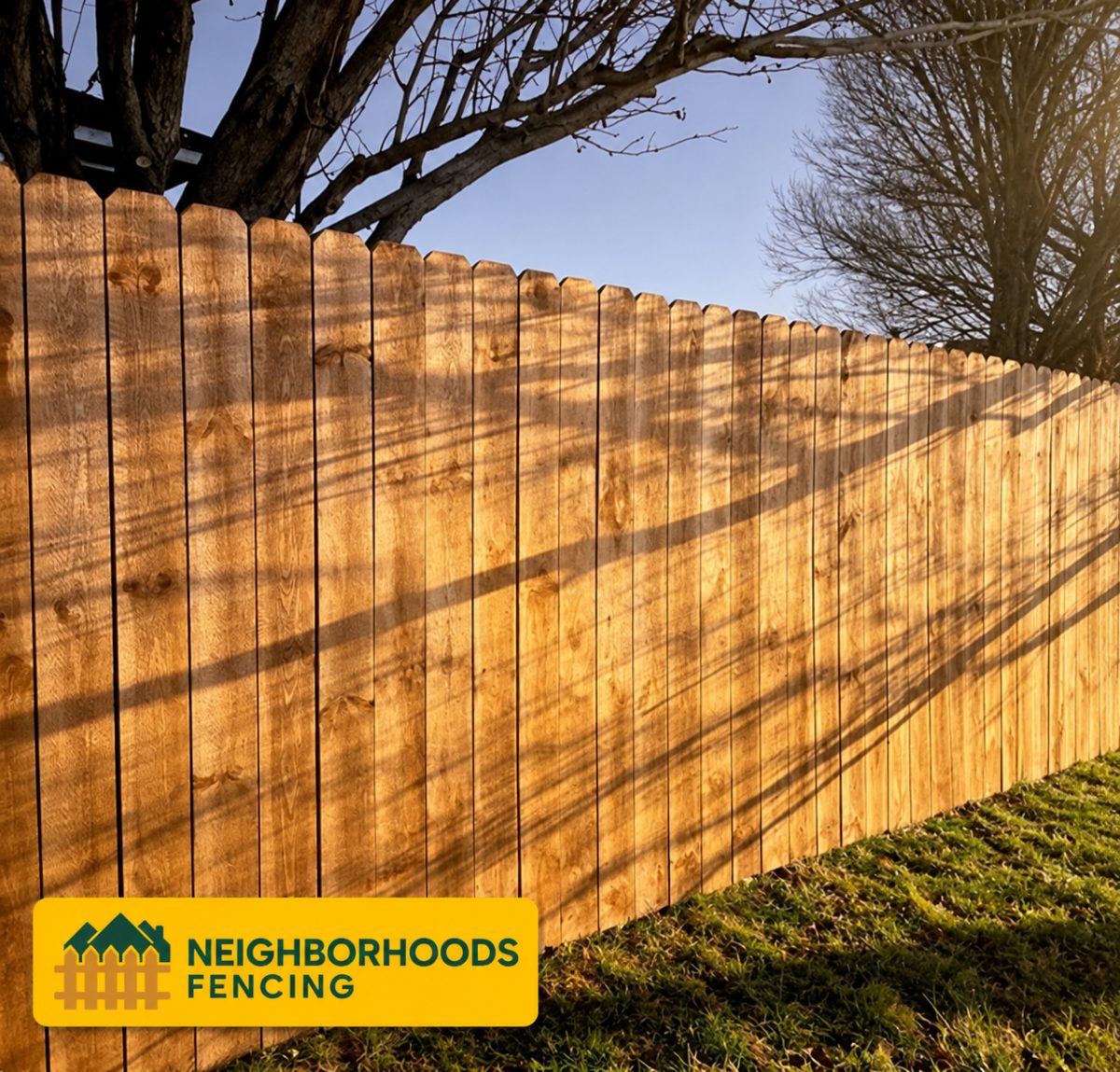
Stain penetrates wood fibers instead of forming a thick surface film. That means stain highlights natural grain and texture, and can offer moisture and UV resistance depending on the product. Homeowners can choose transparent, semi-transparent, or solid stain to balance natural appearance with coverage. Transparent or semi-transparent stains emphasize wood character and are easier to refresh, while solid stains give more color but still show some texture. Many stains include water repellents and UV inhibitors, but reapplication is part of ongoing wood fence maintenance Florida homeowners should plan for. Staining is often the best choice for those who want a natural wood look and protection without the uniform surface of paint.
Stage 3. What painting offers and how it compares to staining
Paint provides a uniform appearance and the broadest color range so you can match siding or landscaping. It forms a surface barrier that helps block moisture and UV rays, but proper preparation is more demanding. Painting over dirty, mildewed, or loose wood leads to peeling, cracking, and chipping, so cleaning, priming, and careful application are essential. Compared to stain, paint typically hides wood grain and requires more frequent full-surface maintenance when it starts to fail. In contrast, a stained fence can be spot re-stained in some cases. Cost, desired appearance, and willingness to repaint down the road determine whether paint or stain is the better long term match for your property.
Stage 4. Preparing, sealing, and the right timing for application
Preparation is critical for a lasting finish. Clean dirt and mildew with an appropriate cleaner, allow the fence to dry fully, replace rotten boards or loose fasteners, and do light sanding where needed. New wood sometimes needs time to dry before finishing, so check moisture content or follow the lumber supplier and finish manufacturer recommendations before you stain or paint. Consider a separate sealer or a stain with built in sealant. Sealers and water repellent products reduce moisture absorption into end grain and fastener holes and can slow mildew growth. Avoid painting or staining over structural damage, and protect landscaping while you work. Pressure washing can help but should be used carefully to avoid damaging weakened wood.
Stage 5. Ongoing maintenance, when refinish is not enough, and local considerations
There is no single schedule for refinishing. Frequency depends on the product used, sun and rain exposure, wood species, and previous maintenance. Inspect the finish rather than relying solely on years. Signs to refinish include faded or uneven color, wood soaking up water instead of beading, peeling paint, surface cracking, mildew, splintering, or loose boards. Refinishing will not correct rotten posts, severe warping, broken rails, or major insect or storm damage. Those conditions may require wood fence restoration, repair, or replacement before painting or staining. For homeowners in Citrus Springs and Central Florida, plan inspections after heavy rains and storm season. For professional help with wood fence installation, wood fence repair Citrus Springs, privacy fencing, hurricane-season fence maintenance, or full restoration, Neighborhoods Fencing can evaluate the structure and recommend the best finish and schedule.
Make the choice that matches your fence condition and maintenance plan
Choosing paint or stain for a Citrus Springs wood fence comes down to priorities. Stain preserves natural grain and is often easier to refresh while paint delivers consistent color and coverage but needs careful prep and repainting over time. Whatever you choose, start with a structural assessment, follow proper preparation steps, and select products formulated for exterior wood and Florida conditions. Regular inspections and timely repairs will extend your fence's life. When structural repair or professional refinishing is needed, Neighborhoods Fencing provides local expertise across Citrus Springs, Dunnellon, Ocala, Lake County, and surrounding Central Florida communities.
Frequently Asked Questions
Is it better to paint or stain a wood fence in Florida?
There is no single best choice. Stain is a good option if you want to preserve natural wood grain and expect easier spot maintenance. Paint gives uniform color and may better match your house or landscape, but it requires more prep and eventual repainting. Consider your aesthetic priorities, willingness to maintain the surface, and the fence's current condition.
How do I protect a wood fence from Florida rain and humidity?
Reduce moisture absorption by cleaning mildew promptly, using a stain or sealer with water repellent properties, and making sure damaged boards and posts are repaired or replaced. Proper drainage and trimming plants away from the fence also help. Products labeled for exterior use and UV protection perform better in Central Florida climate.
Does Neighborhoods Fencing provide wood fence installation and repair in Citrus Springs?
Yes. Neighborhoods Fencing installs and repairs wood fences in Citrus Springs and surrounding Central Florida communities. We offer wood fence installation, wood fence repair Citrus Springs, privacy fencing, hurricane-season fence maintenance, and wood fence restoration. Call 1 352-342-8600 or visit https://neighborhoodsfencing.com to schedule an assessment.
Need help deciding or ready to schedule maintenance?
If your fence needs assessment, repair, or a professional staining or painting job in Citrus Springs or nearby areas, our experienced team can help with recommendations, preparation, and durable installation or restoration.
Need Help With Your Wood Fence? Contact Neighborhoods Fencing